
Knowing how to spot a deepfake used to mean looking for what it got wrong. Now looking too good can be the warning sign, and new research found people rated AI-generated faces as more real than real ones.
A new University of Florida study, published in the journal Social Cognitive and Affective Neuroscience, enrolled 156 adults in two age groups, 18 to 37 and 60 to 89, and analyzed ratings from 147 of them. Each rated how real 80 faces looked, half real photographs and half generated by AI. On average, both age groups rated the AI faces as more real than the real photographs. The effect was small in younger adults and much larger in older adults. Natalie Ebner, the psychology professor who led the study, said people are “actively being drawn in the wrong direction.”
Brain scans from 126 of the participants showed lower activity in the anterior insula, a region that helps flag important or suspicious information, when people looked at the fakes. Lower activity went along with higher realness ratings, which the researchers describe as a neural correlate of the effect. That brain response did not differ by age group.
The study tested still photos of faces made with an AI image generator called StyleGAN2, and the researchers screened out AI faces with obvious flaws before it began. Flaws like extra fingers and gibberish on street signs still turn up in AI images and can still expose a fake. In my own digital forensic work, the question now is often a different one: does the file look better than the camera that supposedly recorded it could produce?
Why AI-Generated Faces Look More Real Than Real Ones
The Florida researchers suggest one possible reason: AI generators tend to produce average-looking faces, which may be easier for the brain to process.
An earlier study from the Australian National University, published in the journal Psychological Science, found something similar. AI-generated White faces were judged human more often than real human faces, and the people who made the most errors were the most confident. The researchers called the effect AI hyperrealism.
What Real Security Camera Footage Looks Like
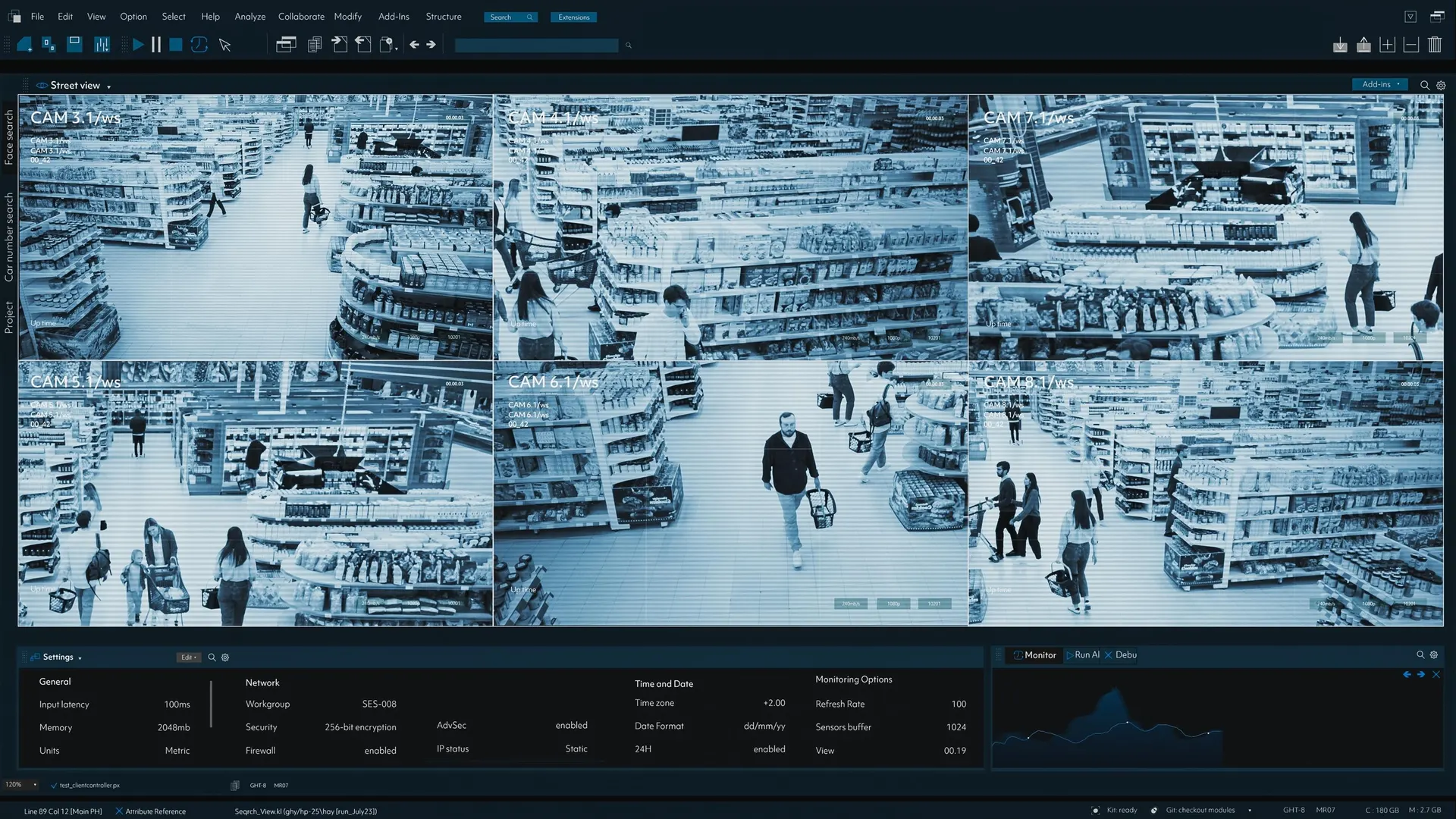
Surveillance video that ends up in a dispute is often rough. Many recording systems save storage by capturing fewer frames per second and compressing the footage heavily, which can turn faces into blocks of pixels. Moving subjects can blur. At night, many cameras switch to black-and-white, and low light adds grain. Cameras are often mounted high, wide lenses can bend the edges of the frame and many systems burn a timestamp into the picture. Handheld phone video can start late and shake.
James Law, editor in chief of the social media news agency Storyful, wrote in Fast Company that AI video can now imitate security camera, dashcam and bodycam footage. In his telling, AI video tends to jump straight to the action, centered and cleanly lit, while real eyewitness footage often has dead time and fumbling. Law warns that those gaps are likely to close.
How AI Enhancement Makes Real Video Look Too Good
Footage can also look too good because someone improved it. Martino Jerian, CEO and founder of the forensic video software company Amped Software, warned in a post on the company’s blog that AI tools can make blurry or low-quality media look clearer, but “they can also invent convincing details that were never captured.” His post cites several examples, including these two.
After a fatal shooting involving an Immigration and Customs Enforcement officer in Minneapolis, people used AI tools to “unmask” the officer from video where his face was covered. The tools invented a face, and Jerian writes that the result led to harassment of people who had nothing to do with the shooting.
The second was a Washington state murder case. The defense sought to introduce cellphone video that had been run through AI enhancement software. A forensic video analyst who reviewed it for the prosecution said the enhanced version contained visual data that was not in the original, according to NBC News. The judge barred the enhanced video, writing that the technology relies on “opaque methods to represent what the AI model ‘thinks’ should be shown.”
Spotting Deepfakes: When A Video Looks Too Good
Clean footage is not automatically fake. A modern 4K camera in good light can record sharp video. Looking too good is a reason to examine a file, and the examination may support where the file claims to come from, contradict it or come back inconclusive.
A detection tool can flag a clip for a closer look, but its score is not proof. The stronger answer comes from tracing the file back toward the camera or phone that supposedly recorded it. When a video or photo looks better than it should, these are the steps I would want taken:
- Keep the file exactly as it was received, then get the native export from the original recording system.
- Get comparison footage from the same camera, recorded in similar lighting with the same settings. If the questioned clip looks better than comparable footage from that camera, that difference needs an explanation.
- Examine the file’s format, encoding, structure and metadata, and check its export history against whatever records exist.
- Find out who had the file and whether anyone ran it through editing or AI enhancement software.
- When a claim or a case relies on the file, have an examiner with video and image authentication experience review it before it is relied on or anyone is accused of faking it.